2020.06.12
Photographer’s Flow Work to Photo Submission Part 1
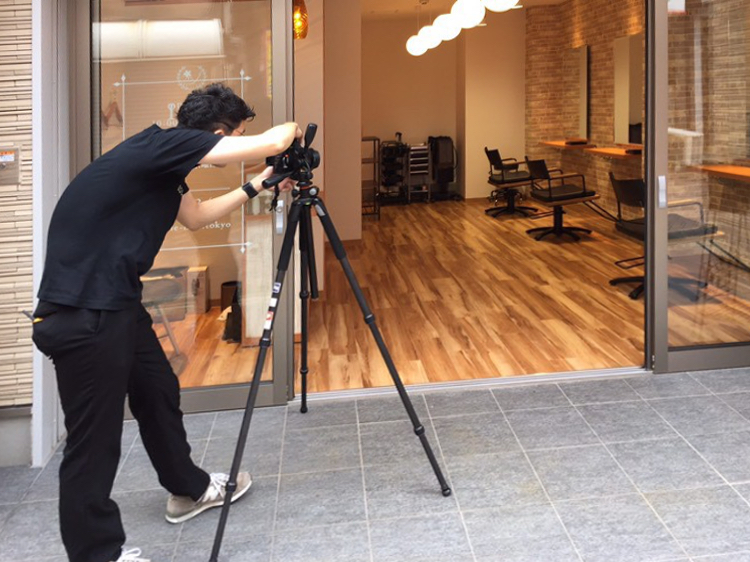
What exactly is the work of a photographer? I’m sure it’s the same in all industries where we don’t know the specifics of other people’s professions, but here’s my I will try to note the flow work from the time a commercial photograph is commissioned to the time it is completed and submitted. I’m mainly an architect, so this time it’s architecture.
・Before the photo shoot
What kind of use is the building? What kind of atmosphere do you need the photos in? Who does the photos (and the price varies depending on the user due to copyright issues)? How big is the building? If it is a renovation, where is the scope of the project? Do you need the look? Time of day?
The equipment will vary depending on these factors, and you may need a person to help you.
・Shooting
Putting things away. This is a very important part of the process. Basically, the photographer doesn’t touch it, the client does. But I can suggest things that would be better with or without the angle of view, or I can give the client some suggestions. I ask and discuss with them. If the property is not cleaned up at all, it will increase the time it takes to shoot, and you will need a lot of guarantee. It can be.
In my case (as I think most architectural photographers do), I set up my camera on a tripod and shoot. What I think is most important in photography is composition. Nowadays, digital technology allows me to be more flexible in terms of brightness and coloration afterwards (post-production). . But there’s nothing I can do about the composition. You can’t fix what you don’t have, or worse, you have to draw. Some architects like to shoot directly opposite each other, and some spaces are better aimed at at an angle. I consult with a lot of people, but I often shoot “a lot of patterns anyway”. The client’s image isn’t solid, and we can’t make a decision on our proposal, so “all the patterns It’s a bit of a problem for clients who demand to be filmed. However, there is a limit to the amount of time we have to shoot, so we discuss it carefully.
・Shooting – about the color
I mentioned earlier that brightness and color can be controlled, but when it comes to color, it’s actually a very serious area There is also, of course, shooting in RAW. In my case, I don’t shoot in anything other than RAW in digital, but due to media capacity and the fact that I have to submit Due to the medium (no time to change media, lack of timing, no need for high quality, lighting) Sometimes I shoot in JPEG, which requires less space (where The next time you shoot a color-sensitive architectural photo (especially one that makes full use of lighting in the interior) with JPEG settings. (e.g., space, etc.), you may not notice it at the time of shooting, but when you try to develop it, the color information is transferred to the data. Sometimes it doesn’t stay on at all and doesn’t turn out to be the shade you want it to be. I’ve had one experience of failure with this.
Otherwise, as far as tinting is concerned, the medium edition digital probably has more color information than the medium edition digital, so the medium edition There are some photos that can only be taken digitally. You’ll have to make choices in this area as well.
・Shooting – Composition
As far as composition is concerned, if you have a very small property, you can stitch the photo and make it vertical or horizontal to make the space larger Sometimes you can devise a way to make it look better. Connect three horizontally composed photos horizontally to create a CinemaScope aspect ratio. Take three horizontally composed photos and connect them vertically to create a 4:5 aspect ratio. And so on. As for the aspect ratio, you can use Cinemascope (1:2.35* very wide) and I chose 4:5 (I sometimes use this ratio because 4×5 inch film existed) and A 1:1 square is fine, and a 1:1 square is fine, but in this day and age of digital technology, there is no right answer to the aspect ratio. I think it’s okay to cut down on the aspect ratio to get rid of a few extra parts (of course). The image circle of a lens is a round circle. The image circle of a lens is a round circle, and it’s a circle from which film, digital, large format and The medium version records the image (light) onto a film or video device. At this point, you can see that photographs are cropped… in the days of 35mm film and Brownie film 6×6, 6×4.5, 6×7, 6×8, 6×9, 6×12, large format and above 4 ×There are many aspect ratios, such as 5 x 5, 8 x 10, etc. Of course, in the old days, we used to print film that we had shot, so we had to make prints with cabinet size aspect ratios. There are really a lot of ratios for L size aspect ratios, 6 cuts, 4 cuts wide, and so many more. So I think you should choose the one you think is good for you. Of course, you need to choose the ratio that makes your photos look the most beautiful, and you need to consider the ratio for different purposes. You also need to.
As far as image circles and proportions are concerned, I started with architectural photography, using large format, scaffolding, and a good I started to think about this. What part of the image circle do I use (which composition I choose to use)? This is the same as what part of the image is cut out (trimmed).
・What you’re thinking about.
Some people shoot without thinking about these things at all, and some people shoot for efficiency. I think there are. But I don’t think there’s any such thing as one or the other. But for me, I’m always thinking about that. It’s cool to catch the trend, but when you think about it all the time, there are conflicts and discoveries It’s interesting. I can see what’s popular in the world (use of color, composition, medium of presentation, etc.). I’m most relieved when I burn my work in the darkroom and exhibit it in a gallery. I’m free to ride or not ride, while making an effort to get to know the
・Continued in the next article (on developing and editing)
This is where I’ll end this article as it’s getting a bit long. I hope to be able to write more about the story after the shoot in the next article. Next time I’ll be able to write about the following: white balance, grey cards and colour Chart, LED lighting quirks, and overcorrecting the WB correctly, with the light room Capture One, color space, resolution, Photoshop and other software, submission methods, recording media, What is the correct color of the evening sky? Is there a right color of lighting? Shooting, lighting. etc.
・conclusion
I think it’s a completely different workflow when it comes to being a writer and creating work. It’s important to read the client’s intentions when they ask you to do something, and it’s important to understand the purpose of the work when it’s being made. It’s interesting to think philosophically and have fun thinking about how to photograph such things in I think the In commercial photography, I get a lot of guarantee and relatively passive work, but the act of shooting is the same. It’s a good kicker to find out what your clients and stakeholders are thinking about. You can make the most of it, or you can think about it in isolation without any relationship at all. Whatever it is, the interesting thing is that when you engage with people, it affects you.
Please excuse the ramblings as I scribble in my notebook.